Thursday, 3 April 2014

Articles by Alex Bell: Food shortage fears as govt cancels import permits...

Articles by Alex Bell: Food shortage fears as govt cancels import permits...:


Agriculture Minister Joseph Made
By Alex Bell
SW Radio Africa
03 April 2014

Published by SW Radio Africa

The immediate cancellation of food import permits have sparked fears of a looming shortage of fruit and vegetables, with no clarification yet of when imported fresh produce will be allowed back on shelves.

Agriculture Minister Joseph Made said in a statement this week that all current fruit and vegetable import and export permits, previously issued by the ministry, had been recalled with immediate effect. This followed a Government directive on Monday that there was a need to revise the rules and regulations governing the importation and exportation of agricultural produce.

The move means that all fresh produce brought into the country will not be permitted, until new import permits are issued. It is not yet clear who will now be given the permits and when. But in the short term it means grocery stores and other shops who sell imported goods will soon run short of stock.

The effect of the directive is likely to be far reaching, with Zimbabweans mostly reliant on imported fresh produce because of the destruction of the domestic agricultural sector. The import of fresh fruit and vegetables from South Africa, for example, is said to be worth an estimated $1 million a month.

At the same time, some commercial farming groups in Zimbabwe remain afloat because of international exports of their produce, with large supermarkets chains and others still sourcing Zim fruit and vegetables.

Economic analyst Masimba Kuchera said the directive has likely been motivated by pressure from local producers, who have argued that imports are killing the local markets.

“The idea is good, but the timing is really bad. This may induce a food shortage because the directive is coming with immediate effect. Local farmers are likely not prepared to chip in with the required food tonnage of produce for the markets,” Kuchera told SW Radio Africa.

He added: “So we may have a ripple affect with price increases in the short term, because we will have fewer goods with a lot of demand.”

Kuchera also warned that the impact on the export market will be serious, because Zimbabwe’s economy is still in desperate need of foreign currency.

“From an export perspective this is shooting yourself in the foot, because some of the foreign currency in the market is generated from this sector. So this (the directive) reduces the country’s ability to earn foreign currency which is required at the moment,” Kuchera explained.

He added that corruption, which has been rampant in different Zimbabwean sectors, is a source of concern moving forward, with the import/export industry worth millions of dollars.

“Corruption is something we have to be worried about generally, because it has pervaded every nook and cranny of Zimbabwean transaction. Clearly we have a situation where there is a culture of doing business where kickbacks and bribes are the order of the day,” Kuchera warned.


To contact this reporter email alex@swradioafrica.com or follow on Twitter

Articles by Alex Bell: Property rights take centre stage in fresh land co...

Articles by Alex Bell: Property rights take centre stage in fresh land co...:

By Alex Bell
SW Radio Africa
02 April 2014

Published by SW Radio Africa

Zim farm invasions
One of the legacies of the farm invasions is there are no longer property rights in Zimbabwe
Commercial farmers in Zimbabwe are moving to shift the focus of the land compensation debate to become a national issue, with individual property rights at the centre of the argument.
This is one of the issues being debated during a series of meetings on farm restitution and compensation in Zimbabwe this week. Featuring South African land valuer Mills Fitchet, discussion has zeroed in on the danger of Zimbabwe’s agricultural sector being undervalued because of the nation’s land policies.
The land grab campaign that has defined the current farm ownership system effectively destroyed property rights in Zimbabwe, with vast tracts of land being claimed as ‘state land’ and parceled out along partisan lines. This situation still persists, despite warnings that without a return to a productive agricultural sector, enshrined by rights to property ownership, Zimbabwe’s economy will fail to recover.
John Worsley-Worswick, who heads the Justice for Agriculture (JAG) group, said Wednesday that “there is a necessity to bring the land issue to closure.” He told SW Radio Africa that protection of property rights and individual access to title deed was key for Zimbabwe to move away from being a ‘begging nation’, reliant on highly expensive food imports and aid.
“In Zimbabwe the agricultural land is the biggest national asset, and if this land is not valued properly, to an international standard, then we become a beggar nation and we will have to accept the reconstruction of Zimbabwe on someone else’s terms,” Worsley-Worswick said.
He said that Zimbabwe, which has the potential to be a strong player in international food production, “can’t afford to have this asset undervalued in any way.” He added that the local land tenure system, which “hamstrings” agricultural endeavours, means the country’s agricultural value is not what it could be.
“Property rights issues and compensation issues are going to be at the forefront of concerns before we can go forward. These rights have been grossly infringed and trampled on for years. Individual rights to property is a basic human right and these issues have to be dealt with before going forward,” Worsley-Worswick said.
The property rights issue has previously been argued as the key for Zimbabwe’s agricultural restoration, along with a transparent, independent land audit to decipher exactly who owns what in the country.
Such an audit has recently been recommended in a new report about the prospects for Zimbabwe’s economic recovery. The report, Zimbabwe’s International Re-engagement: The Long Haul to Recovery argues that if the country is to salvage its crippled economy and attract investment, the government must demonstrate that Zimbabwe is a worthwhile business destination and credible partner.
The report says the government must move to reduce uncertainty about the multi-currency system, indigenisation, and complete a full, impartial land audit.
To contact this reporter email alex@swradioafrica.com or follow on Twitter

Friday, 6 December 2013

Mourning Madiba

South Africa’s former President and global icon Nelson ‘Rolihlahla’ Mandela has died aged 95.
Mandela died aged 95 (pic SABC)

Mandela was hospitalised repeatedly over the past year and in June it was announced the former statesman was in a critical condition. Rumours then circulated that he was being kept on life support, but he was eventually released from hospital care and returned to his Johannesburg home.

Current President Jacob Zuma announced Mandela’s death on Thursday night. He died in his Houghton home.

Seen as the last truly global icon, Mandela has for years been regarded as the embodiment of tolerance and peace. He is revered around the world for bringing South Africa back from the brink of national chaos and firmly ending the inequality and cruelty of the apartheid era.

During the apartheid years Mandela was arrested and convicted of sabotage and conspiracy to overthrow the government, and sentenced to life imprisonment. He spent 27 in prison, including time on Robben Island, in Pollsmoor and Victor Verster prisons, before his release in 1990.

Four years later, South Africa held its first democratic elections and Mandela was inaugurated as President a few months after that poll.

As South Africa’s first black President, he was not content with bringing such an important change to the country, but also strived to bring real reconciliation to the ‘rainbow nation’. He repeatedly emphasised this message of personal forgiveness and reconciliation and famously announced in 1995 that "courageous people do not fear forgiving, for the sake of peace."

Although only President for one term, the unity and relative peace seen in the country for many years has been attributed to the ‘Madiba magic’ that he managed to spread across the nation. For many South Africans, that ‘magic’ helped develop a vision of a South Africa free from its troubled past, where the country’s legacy would not be rooted in hate, but inspired by tolerance.

“What counts in life is not the mere fact that we have lived. It is what difference we have made to the lives of others that will determine the significance of the life we lead.” – Mandela, 2002

Mandela was also loved throughout the rest of the world, revered as a voice of truth and of right in the face of wrong. This saw him win hundreds of noted international awards, including the 1993 Nobel Peace Prize, the US Presidential Medal of Freedom and the Soviet Order of Lenin.

In Zimbabwe, Mandela will be remembered as a respected liberation leader. For many Zimbabweans however, Mandela will also be remembered for not speaking out against Robert Mugabe, despite the human rights abuses being committed by his regime. In 2008, when politically motivated violence was on the rise in Zimbabwe, Mandela came under huge pressure to publicly condemn what was happening.

He eventually made a comment during a visit to the UK, where he said that there was a "tragic failure of leadership" in Zimbabwe. The comment, though lauded as a strong condemnation, was criticised for not being critical enough. The excuse given was that Mandela did not want to interfere in a situation meant to be under the control of his political successor Thabo Mbeki, who in turn faced condemnation for his policy of ‘quiet diplomacy’ towards the crisis in Zimbabwe.

19 years since Mandela become president, South Africa’s battles have changed, with poverty, corruption and crime still regarded as major challenges preventing the relatively new democracy from achieving greatness. But there is hope that the ‘Madiba magic’ will not fade, and his legacy will live on

“For to be free is not merely to cast off one’s chains, but to live in a way that respects and enhances the freedom of others.” – Long Walk To Freedom

Tuesday, 15 October 2013

No African leadership prize in 2013 as African leaders fight for impunity

There is little coincidence that the respected Mo Ibrahim Foundation once again did not declare a winner for African leadership during its 2013 Ibrahim Index of African Governance presentation on Monday, despite the 'gains' in governance and development the Foundation has praised.

The award is only considered for FORMER heads of state, and to win, they 
must fulfill the following criteria: be a democratically elected former African Head of State or Government who has left office in the previous three years; have served her/his constitutionally mandated term; and have demonstrated excellence in office, helping to lift people out of poverty and paving the way for sustainable and equitable prosperity.

But for the FOURTH time since the prize was established in 2007, and for the second consecutive year, the award in 2013 has no recipient.

The non-award has coincided with the proposal raised at an African Union (AU) summit over the weekend that sitting heads of state be immune from prosecution at the International Criminal Court. The proposal was raised at a meeting specifically called to look at Africa's relationship with the court, with pressure building for African member nations to withdraw.

The two may not be in any way linked, and as many commentators have said, there has been significant progress in terms of governance figures in Africa that suggest not all is doom and gloom (read the 2013 Mo Ibrahim Index here).

But it is a coincidence too glaring to overlook. On one hand you have another empty award, which can be read as yet another sign of the void of decent leadership in Africa. On the other hand you have a proposal so shocking, that the integrity of the continent has again been brought into question.
 
Daniel Bekele (pictured) the Executive Director of the Africa Division of Human Rights Watch, was among the many to criticise the African leaders. He said, in a Dispatches report on the HRW wesbsite that the "depressing truth" about the AU meeting in Addis Ababa "is that the main issue on the agenda was how to protect a handful of Africa’s most powerful people."

"AU leaders concluded that instead of addressing any of the urgent human rights disasters that threaten Africans, displacing millions and forcing tens of thousands to flee abroad, the most urgent issue was to unite their voices to obstruct the work of the International Criminal Court (ICC), which has become the last, best hope for many of those Africans who have been victims of  atrocities implicating some of these very same leaders," Bekele said.

He added that despite the AU "paying lip service to ending impunity, the central proposal out of Addis was that sitting heads of state or anybody acting or entitled to act in such a capacity should have immunity from prosecution. That means Sudanese President Omar al-Bashir should be not be required to appear for trial for genocide and crimes against humanity, or Kenyan President Uhuru Kenyatta for crimes against humanity. (Let’s not forget that Bashir is currently the only head of state aside from Syria’s Bashar al-Assad who is implicated in bombing his own people on a daily basis.)"

Meanwhile, Peter Fabricius, the foreign editor of Independent Newspapers in South Africa, has questioned in the Au proposal was a 'red herring'. He wrote in an opinion piece that "the AU summit did not decide that African states should withdraw from the ICC. Many commentators welcomed this decision as a victory for Africa’s fight against impunity."

"But was it such a great victory? Or was the threat of total withdrawal always just a red herring? Did it distract our attention from what the AU leaders actually decided in the end – that all other Africans should remain subject to ICC prosecution – while granting themselves impunity?" Fabricius questioned.

The precedent being set in Africa right now is a seriously disturbing one, but is there still hope as the Mo Ibrahim Foundation believes. What are your views? Let me know.

Friday, 19 April 2013

Would you give Zimbabwe's army military grade helicopters?

I know I wouldn't, if it was in my power to make such decisions. And you don't need to search too hard on Google to understand why the notoriously pro-Mugabe military in Zimbabwe should not be further supported in terms of such hardware.

So why and how did the South African National Defence Force think they could get away with donating a full fleet? Did they think no one would notice?

Luckily, groups like AfriForum exist for the simple fact that they challenged this donation, and this week an interdict against the delivery of the helicopters was upheld.

Here's my latest report:


A fleet of helicopters that were set to be donated to Zimbabwe’s military by the South African National Defence Force (SANDF), will remain where they are for now.

The North Gauteng High Court in South Africa on Thursday upheld an interdict against the delivery of the helicopters, meaning the donation will not happen in the near future. The Court also ordered the government to pay costs for Thursday’s legal proceedings.

The legal battle began soon after it emerged in January that the SANDF was planning to gift its fleet of unused Alouette helicopters to the Zimbabwean army. Civil rights group AfriForum had applied for an urgent interdict to stop the donation and that interim interdict was granted to allow time for the main application challenging the donation to be finalised.

AfriForum is arguing against the donation on the basis that Zimbabwe’s human rights record indicates that the helicopters could be used to facilitate oppression. The group has warned that South Africa would be complicit in such oppression if it willing gifted the helicopters, in spite of the human rights record across the border.

This is of particular concern as Zimbabwe heads towards elections, and incidents of politically motivated violence as well as a crackdown on civil society have intensified.

AfriForum’s legal representative Willie Spies told SW Radio Africa on Thursday that the interdict was upheld because of a ‘concession’ by the government’s legal team.

“It was quite an awkward experience. We were ready for the process and had gone to a great deal of trouble to ensure the matter was brought before court in a relatively small amount of time. That was on the insistence of the legal team of the government,” Spies explained.

He continued: “But all a sudden the senior advocate for the government indicated he was not well and was not ready to carry on. And the government just tendered costs and said the matter should be postponed for an indefinite period. They also offered that the interim indict be maintained until the process is finalised.”

“So it’s quite a concession by the government lawyers and means the matter was not formally heard. We are satisfied for the simple reason that the helicopters will not be exported, will not be donated, will not be delivered.”
Spies went on to explain that they are now waiting for the government’s lawyers to proceed, but stressed “we won’t rush the matter. As soon as the government’s lawyers are ready, we will go to court. In the time being, we have what we need.”

“The only way the helicopters will be donated is if the government’s lawyers successfully challenge our review application. I have serious doubts that they will be successful. We have a very strong case. I’m not convinced they have a strong case. The fact that the lead council today essentially kicked for touch is indicated that they are not confident to go to court,” Spies said.

Thursday, 18 April 2013

Zimbabwe's diamonds: How political will and new 'diplomacy' is still standing in the way


Zimbabwe's diamond sector remains the giant screaming elephant in the room in terms of Southern African development, because the riches quite simply have changed the face of diplomacy in the space of a few years. From being a condemnable epicentre of human rights abuses (including murder, beatings, forced labour and more) Zimbabwe's lucrative diamond fields are now the centre of diplomatic wrangling, with everyone wanting their slice of this shiny pie. 

Cynic I may be, but there is no denying that the outrage that followed the 2008 murder of hundreds of diamond panners at the hands of the Zim military (who gunned down scores of people in single rounds of gun fire from helicopters) has morphed into a tragic acceptance that this was 'collateral damage'. 

Those abuses will never be investigated. Those lost lives will never be honoured  The horrific abuses that followed (and reportedly still happen) will not receive any outcry. And you can thank the Western world for this state of affairs.

The biggest slap in the face for many Zimbabweans (and other concerned people) however will be the fact that this situation is being actively normalised, not for the sake of the millions who need the diamond riches to be utilised to improve their lives, but rather to enrich a corrupt minority. 

So moving to my latest article on the situation:

A complete overhaul of Zimbabwe’s political framework has been described as the key to unlocking the country’s true diamond potential, which remains under a cloud of corruption and suspicion.

Noted human rights defender Farai Maguwu (pictured below), who is the Director of the Centre for Natural Resource Governance, made these comments during an interview with me on Tuesday. He was explaining how the Zimbabwe Diamond Policy, adopted by the government last year, is not enough to ensure the diamond sector becomes a transparent, accountable, beneficial one.

Farai Maguwu on Question Time
Farai Maguwu from the Centre for Natural Resource Governance
The Centre this week released a full analysis of the Diamond Policy, stating that while the Policy is a good starting point to improve governance in Zimbabwe’s diamond, it does need revision. The Centre states in its analysis key issues remain unaddressed, namely investor identification, revenue transparency, community participation, mine closure, environmental impacts and access to information, among other things.

Maguwu said that the major problem in the sector is a result of a lack of political will, which is preventing proper governance and oversight in the industry.

“It is an issue of politics. I have always said that Marange (diamond fields) should not be seen as an island, because it is a part of Zimbabwe that is experiencing the same governance problems in every sector in the country. Unless there is a turnaround in the way we think and the way we do things politically, there won’t be the quick turnaround we need,” Maguwu said.

He added: “We need political will; we need good leaders who have the interests of citizens at heart. Not the current situation where we have unpatriotic elites who are doing things for themselves and not for the people.”

Maguwu also explained that aside from the ‘internal’ problems dogging the industry, there are also external factors.

“We have (diamond) dealers who are taking advantage of the weak political, institutional, legislation and policy framework in Zimbabwe to do underhand deals and in the process are prejudicing Zimbabwe of millions of dollars,” Maguwu explained.

He said that while the Diamond Policy is an acknowledgement by the government of the need for such a policy, there is still c critical need for revision.

“The Policy does not show that government has learned from it past mistakes … I don’t think we have addressed the fundamental problems and checks and balance in whole value chain,” Maguwu said.

Friday, 15 June 2012

SA info bill back in the spotlight


Thanks to the Guardian newspaper for highlighting this insanely important issue:

South Africa's 'secrecy bill' attracts international condemnation

US and European countries register concerns about curtailing freedom of the press at UN human rights working group
·         David Smith in Johannesburg
·         guardian.co.uk, Wednesday 13 June 2012 18.39 BST
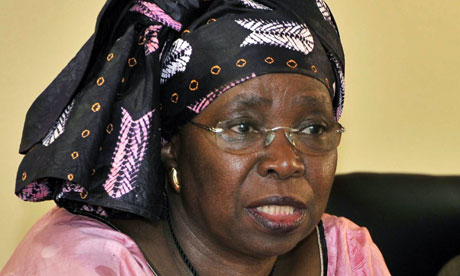
South Africa's home affairs minister Nkosazana Dlamini-Zuma
South Africa's home affairs minister Nkosazana Dlamini-Zuma. Photograph: Jacoline Prinsloo/AFP/Getty Images
South Africa has received widespread international condemnation of its "secrecy bill"during a UN review of the country's human rights record.
The United States, Canada, Czech Republic, Germany, Norway, Poland, Portugal, Sweden and Switzerland all expressed concerns that the proposed laws could threaten media freedom.
The intervention – the biggest collective stand yet taken by foreign governments on the issue – was welcomed by activists who oppose the bill, which could make journalists and whistleblowers vulnerable to prison sentences of up to 25 years.
South Africa's human rights record was scrutinised by a working group of the UN Human Rights Commission (UNHRC) in Geneva recently. A draft report of the meeting shows that Spain "asked about measures adopted to ensure that the future protection of state information does not curtail freedom of the press and right to information on possible inappropriate action by public officials".
Sweden "noted that the protection of state information bill might lead to restrictions on media freedom".
Germany called on South Africa to "safeguard the freedom of the press, through the abrogation of the protection of information bill".
The United States urged: "Engage civil society, activists, NGOs and media to seek common ground on the protection of state information bill."
Canada recommended that South Africa "ensure that the protection of state information bill and other statutory measures do not violate the right to freedom of expression or unduly impede access to public domain information". Norway said the country should make sure the bill "fully complies with international human rights law".
Czech Republic asked South Africa to "reconsider the protection of state information bill to ensure its conformity with ICCPR (international covenant on civil and political Rights), in particular by removing excessive penalties for publication of classified information and the inclusion of a public interest defence".
Poland urged South Africa to "continue amending and improving the project of the protection of state information bill as this law, in the form proposed to the parliament earlier this year, has the potential to undermine the right to access to information and freedom of expression under the pretext of national security and national interest".
Switzerland recommended: "Amend the draft bill on the protection of state information so that freedom of press is not curtailed in a disproportionate manner."
Portugal said: "Consider suspending the enactment of the protection of state information bill, approved last November."
In response, South Africa's delegation insisted the bill was not aimed at the media. "The primary purpose is not to regulate or interfere in any way with the media or access to information, but seeks to amend current statutes not consistent with our constitution," it said. "Government has been very open and has engaged with the media and with civil society. The draft bill is currently before parliament."
South Africa's main opposition party, the Democratic Alliance, said views expressed at the UN would boost efforts to amend the legislation. Alf Lees MP said: "We welcome any influence brought to bear that will result in the bill being amended to make it more acceptable and constitutional."
Noting South Africa's remarks that bill is not intended to curb the media, Lees commented: "Whether or not it is the purpose of the bill is debatable. The fact remains that the bill in its current form still poses a significant threat to human rights and fundamental freedoms enshrined in the constitution.
"The concerns raised in the UNHRC discussions provide greater impetus to the (parliamentary) committee to make further changes to the bill to ensure that it is brought in line with the constitution."
Debate on the bill has stalled again this week. A hearing of the ad hoc committee in the national council of provinces scheduled for Wednesday was postponed indefinitely. The state security department has rejected ANC proposals to water down the bill.
·         © 2012 Guardian News and Media Limited or its affiliated companies. All rights reserved.